Smoke Rises Over Southern Iran in Stunning US Attacks


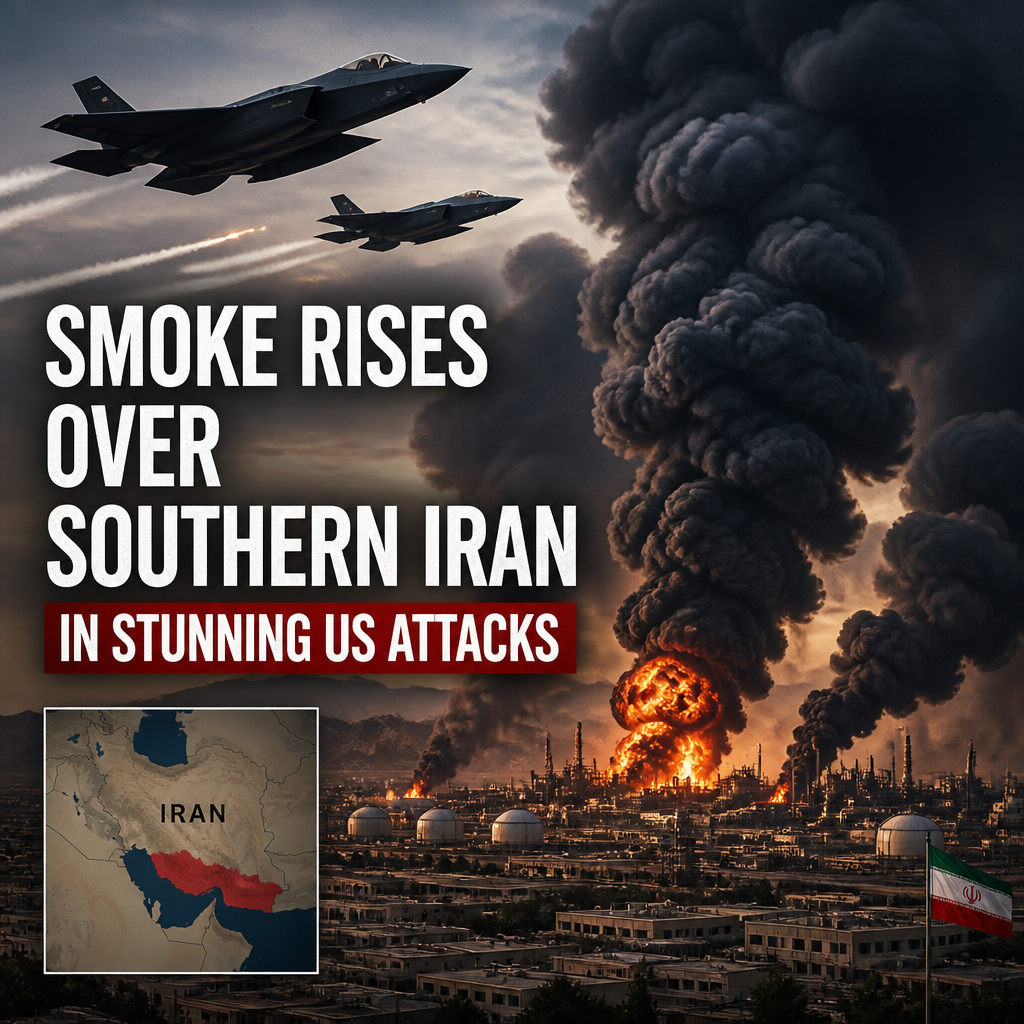
US attacks on southern Iran have triggered a fresh wave of alarm across the region, with smoke seen rising after reported strikes and the political fallout spreading far beyond the immediate blast zone. What makes the moment so tense is not only the scale of the destruction, but the uncertainty surrounding what comes next: whether the attacks are meant as a limited military signal, a broader pressure campaign, or the opening move in a wider confrontation.
US attacks on southern Iran: what the reports show
Across international coverage, the most immediate fact is the same: images and video from southern Iran showed heavy smoke after renewed US strikes. That visual evidence has been central to the story because it signals real damage on the ground, even as the full extent of the impact remains unclear.



Al Jazeera’s reporting has focused heavily on the human and regional implications, framing the attacks as part of a dangerous escalation in an already volatile theater. Its coverage tends to emphasize the risk of civilian harm, the likelihood of retaliatory action, and the broader pattern of confrontation between Washington and Tehran. That lens matters because it reminds readers that a military strike is never just a single event; it can reshape diplomacy, trade routes, and security calculations across the Middle East.
RT’s coverage, by contrast, has typically highlighted the geopolitical struggle and questioned the motives behind Western military action. In that framing, the strikes can be read not only as a response to immediate threats but also as part of a larger contest for influence, deterrence, and control. This perspective often stresses how sanctions, proxy conflicts, and military pressure have helped drive the region into repeated cycles of escalation.




Sky News has generally approached such developments through a more conventional international-security lens, focusing on official statements, military consequences, and the chance of retaliation or spillover. That angle tends to ask practical questions: What was targeted? Was the strike proportionate? Could this provoke attacks on US forces, shipping lanes, or allied territory? While more restrained in tone, it still underscores the seriousness of any direct US action inside or near Iran.
Taken together, the three strands of reporting point to one clear conclusion: whatever the exact target list or tactical purpose, the strikes are being treated by many observers as more than a one-off incident.
Why the reaction is so intense
The southern regions of Iran are strategically important because of their proximity to the Persian Gulf and key energy and shipping corridors. That means any attack there can quickly become a regional issue, even if the original target is narrowly defined.
There are several reasons the reaction has been so strong:
– Military symbolism: Direct US strikes on Iranian territory, or territory Iran considers within its sphere of defense, carry enormous symbolic weight.
– Regional spillover risk: Any escalation could affect neighboring states, shipping routes, and US personnel in the region.
– Civilian concern: Smoke and visible destruction raise immediate questions about whether noncombatants were endangered.
– Diplomatic strain: Such attacks can make already fragile negotiations even harder to sustain.
The challenge is that each side tells a different story about necessity and legitimacy. Washington may present the operation as a response to threats or hostile actions, while Tehran is likely to frame it as aggression and a violation of sovereignty. Media outlets then reflect those competing narratives in different ways, which is why it is essential to separate verified details from political messaging.
What remains uncertain after the strikes
For all the dramatic footage, some of the most important details are still not fully settled. It is not always clear from initial reports whether the targets were military infrastructure, air-defense systems, industrial facilities, or something else entirely. Nor is it immediately obvious how much operational capability was actually disrupted.
That uncertainty matters. In conflicts like this, early claims can be inflated by both sides. A strike may be described as decisive when damage is limited, or as insignificant when the underlying impact is more serious than officials admit. Responsible coverage has to leave room for both possibilities until independent confirmation emerges.
There is also the question of intent. Was the goal to deter, degrade, punish, or provoke? Each explanation leads to a different reading of the event. If the United States was trying to send a warning, then the risk is that Iran responds in a way that makes the warning look ineffective. If the aim was to weaken a specific capability, then the key issue becomes whether the strike actually achieved that.
The bigger picture: force, restraint, and risk
What stands out most is how little room there is for error. Military action in and around Iran rarely stays isolated. Past confrontations have shown that even limited strikes can trigger responses through allied militias, cyber activity, maritime pressure, or missile launches.
At the same time, it would be too simple to describe the situation as a straight march toward war. There are still powerful incentives on all sides to avoid a full-scale conflict. The United States may want to project strength without getting drawn into a larger campaign. Iran may want to demonstrate resilience without inviting overwhelming retaliation. Regional governments, meanwhile, are likely focused on containing the fallout.
A fair reading of the current situation is that both danger and restraint are present at once. The smoke over southern Iran is a visible sign of escalation, but not yet proof of an irreversible path. What happens next will depend less on the image of the strike itself than on the responses it triggers in the hours and days ahead.
For now, the clearest conclusion is that these attacks have intensified an already fragile standoff. The reporting from different outlets may emphasize different motives and consequences, but they converge on one reality: the region is again on edge, and the margin for miscalculation is shrinking.